Use 8 to 12 remote-specific questions per interview round, drawn from at least three of six core categories, and score each answer on a 1 to 5 scale. That combination gives hiring managers enough signal to compare candidates fairly without turning the conversation into a checklist. The categorized bank and scorecard below show exactly how to build that round.
TL;DR:
Asking 8 to 12 remote-specific questions across at least three core categories ensures meaningful signals without turning the interview into an interrogation.
Focus on real past examples that reveal a candidate’s systems and processes in self-management, asynchronous communication, and collaboration, rather than rehearsed answers.
Prioritize operational questions about technical setup, time zones, and boundaries to validate day-to-day remote work capability and prevent burnout risks.
Score responses on a 1 to 5 scale, with a threshold of no category below 3 and an average of at least 3.5 to identify candidates suited for remote work.
Test and prepare your interview technology environment 24 hours in advance, and share evaluation criteria upfront to encourage more honest, system-oriented answers.
Why Remote Interview Questions Need a Different Playbook
A candidate who thrives in an office with a manager three desks away can still struggle badly when the only feedback loop is a Slack message answered six hours later. Standard interview questions rarely catch that gap. They test technical skill and general communication, but they say almost nothing about whether someone can manage their own day, document decisions for people they’ll never see live, or hold a boundary when a message arrives at 11 p.m. in someone else’s time zone.
That gap has real business consequences. Gallup’s 2025 analysis found that fully remote workers report the highest engagement rates of any work arrangement, at 31%, but only when the arrangement fits the person. Hire the wrong profile into a remote seat and you get the opposite: disengagement, missed handoffs, and a slow drain on team trust.
The fix is to screen explicitly for six skill categories, rather than assuming they’ll show up in a standard technical or behavioral round:
-
Self-management — can this person structure their own day without someone checking in?
-
Asynchronous communication — do they write clearly enough that a teammate in another time zone never has to guess?
-
Collaboration — how do they build trust and stay visible without hallway conversations?
-
Technical setup — is their internet, hardware, and tool fluency reliable enough to not become a liability?
-
Time zones — can they plan overlap and handoffs without constant real-time pings?
-
Work-life boundaries — do they protect focus time and rest, or will they burn out by month four?
Not every category deserves equal weight. For a fully remote role, self-management, async communication, and boundaries carry the most predictive power, since there’s no office rhythm to fall back on. For hybrid roles, technical setup and time zones matter less day to day, but collaboration becomes the swing factor. The candidate still needs to build relationships across days they’re not in the room, and that’s a different muscle than pure independence.
Question Bank: Self-Management, Async Communication, and Collaboration
These three categories generate the most useful signal in a first remote-specific round, largely because they’re hard to fake with a rehearsed answer. Ask for a real example every time. A hypothetical (“How would you handle…”) invites a polished guess. A past-behavior question (“Tell me about a time…”) forces the candidate to describe an actual system.
Self-management
1. “Walk me through how you structured a typical workday when nobody was checking your calendar.” Follow up: “What happened on a day that structure broke down?” Listen for: a concrete routine (not “I just get things done”), a specific tool for tracking priorities, and honesty about a day that went sideways.
2. “Describe a project where you had to set your own deadlines. How did you decide what came first?” Follow up: “How did you know you were on track before the deadline arrived?” Listen for: a prioritization method they can name, evidence of checking progress mid-project rather than only at the deadline, and a clear connection between effort and outcome.
3. “Tell me about a time you missed something important because you were working alone, with no one to catch the mistake.” Follow up: “What did you change afterward?” Listen for: genuine ownership rather than blame-shifting, and a specific process change, not just “I’ll be more careful.”
4. “How do you know when you’re procrastinating versus genuinely blocked on something?” Listen for: self-awareness and a described strategy for unblocking themselves (asking early, switching tasks, time-boxing) rather than a vague “I push through.”
Asynchronous communication
5. “Give me an example of a decision you documented so well that no one had to ask you to explain it later.” Follow up: “What format did you use, and why?” Listen for: specifics on structure (a written doc, a project ticket, a recorded update) and an instinct for anticipating questions before they’re asked.
6. “Tell me about a time a message you sent was misread, and how you fixed it.” Listen for: willingness to admit the miscommunication was on them, and a habit of over-clarifying (deadlines, context, tone) instead of assuming it landed correctly.
7. “How do you decide what deserves a written update versus a quick call?” Listen for: a practical filter, like reserving live conversation for genuinely ambiguous or sensitive topics and defaulting to writing for anything reviewable later.
8. “Describe the last time you had to give feedback to a teammate you’d never met in person.” Listen for: specificity and kindness in the same answer, evidence they adjusted tone for a written channel rather than copying how they’d speak face to face.
Collaboration
9. “Tell me about a project where you had to build trust with a team member you rarely talked to in real time.” Follow up: “What did you do in the first two weeks to build that trust?” Listen for: proactive visibility (sharing progress before being asked), and a specific action rather than “I just tried to be reliable.”
10. “Describe a disagreement with a remote colleague. How did you resolve it without meeting face to face?” Listen for: patience with the slower pace of async conflict resolution, and a resolution that didn’t require escalating to a manager.
11. “How do you stay visible on a team when you’re not in the room for the informal conversations?” Listen for: intentional habits like posting progress updates, joining optional calls, or asking questions publicly instead of privately.
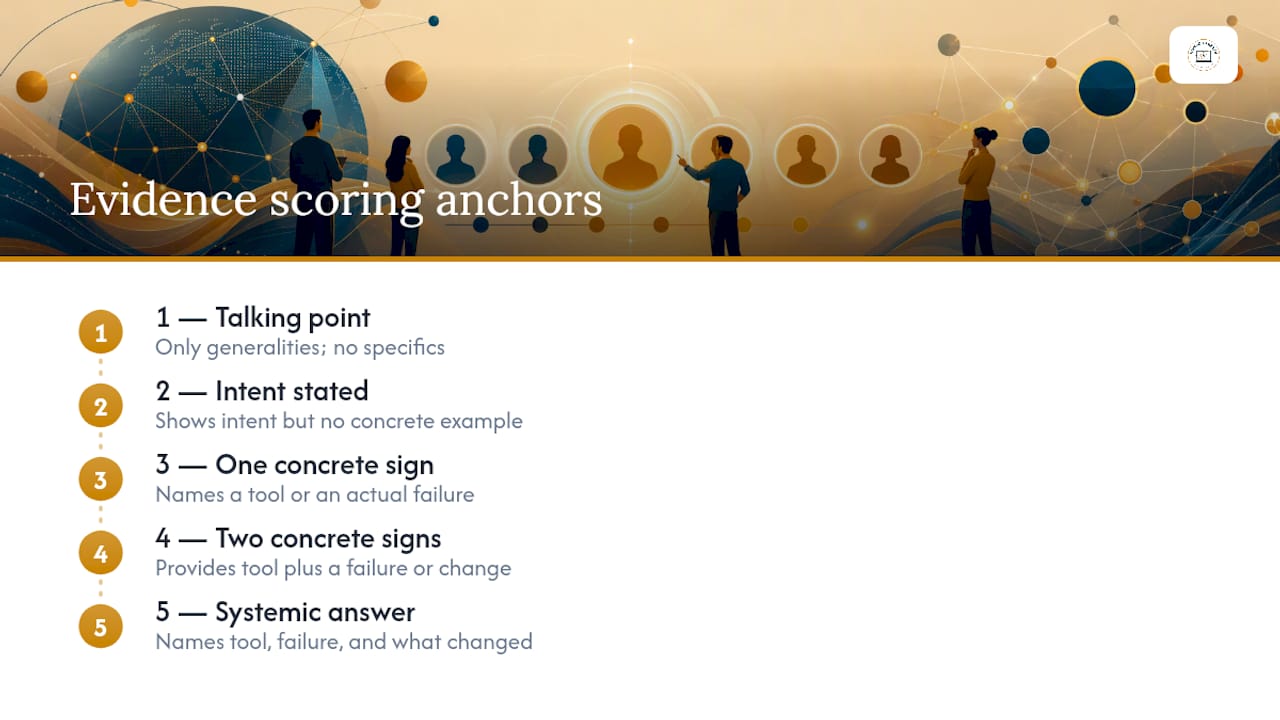
Score each answer against the “listen for” markers above rather than against a gut feeling. A candidate who names a specific tool, describes an actual failure, and explains what changed afterward is showing you a system. A candidate who answers only in generalities is showing you a talking point.
Technical Setup, Time Zones, and Boundaries: The Operational Questions
The three remaining categories are less about personality and more about logistics. They confirm whether someone can actually execute remote work day after day, not just talk about it well.
Technical setup
1. “What’s your internet setup, and what’s your backup plan if it goes down mid-shift?” Listen for: a real backup (mobile hotspot, second location, neighbor’s Wi-Fi they’ve actually used) rather than “I’d figure it out.”
2. “Tell me about a time your tools failed you during an important call or deadline. What did you do?” Listen for: calm troubleshooting and a follow-up fix, not just a story about bad luck.
3. “Which collaboration and project tools have you used daily, and which took you longest to adopt?” Listen for: honesty about a learning curve, which usually predicts faster ramp-up on your own stack.
Keep these questions strictly operational. Ask about setups, habits, and troubleshooting, never about a candidate’s home situation, caregiving responsibilities, or personal circumstances, which are off-limits and legally risky regardless of how casually they come up in conversation.
Time zones
4. “Tell me about a project where you worked with teammates four or more hours ahead or behind you. How did you structure handoffs?” Listen for: a specific handoff ritual (a written status update at end of shift, a shared doc, clear “who owns this next” language).
5. “What overlap hours would you realistically want with a distributed team, and why?” Listen for: a thoughtful, specific range rather than blanket availability, which often signals someone who hasn’t thought through the tradeoffs.
6. “Describe a time a time-zone gap caused a real problem. How did you catch it, and how did you prevent it next time?” Listen for: evidence they built a process (calendar blocks, async status checks) rather than just apologizing after the fact. Practices like scheduling explicit overlap windows and confirming time zones twice before finalizing meetings show up in most guidance on fixing time-zone confusion for distributed teams.
Work-life boundaries
7. “Tell me about a time you had to say no to a request outside your working hours. How did you handle it?” Listen for: a specific, professional boundary statement, not vague discomfort with the question.
8. “How do you know when you’ve worked too much in a given week, and what do you do about it?” Listen for: a concrete signal they track (hours logged, a mood check, a specific cutoff time) rather than “I just push through.”
Weak answers in this category often signal a candidate who will overcommit for the first ninety days and then burn out. That’s a retention risk your scorecard should flag early, not discover six months in.
How Many Questions to Ask and How to Score the Answers
Eight to twelve remote-specific questions per round, pulled from at least three categories, is the sweet spot. Fewer than eight and you’re guessing based on incomplete signal. More than twelve and the interview turns into an interrogation, which tends to produce shorter, more defensive answers instead of real stories. Recruiting resources that build structured question banks around these six categories consistently land in that same 8 to 12 range for a single round.
Score every answer on a simple 1 to 5 scale:
-
1: No real example, or the example actively contradicts the skill being tested.
-
2: A vague example with no system or process behind it.
-
3: A real example with a workable process, but limited depth on outcomes.
-
4: A specific example, a named process, and a clear result.
-
5: A specific example, a named process, a measurable result, and evidence they improved the process afterward.
A short scorecard makes this comparable across candidates:
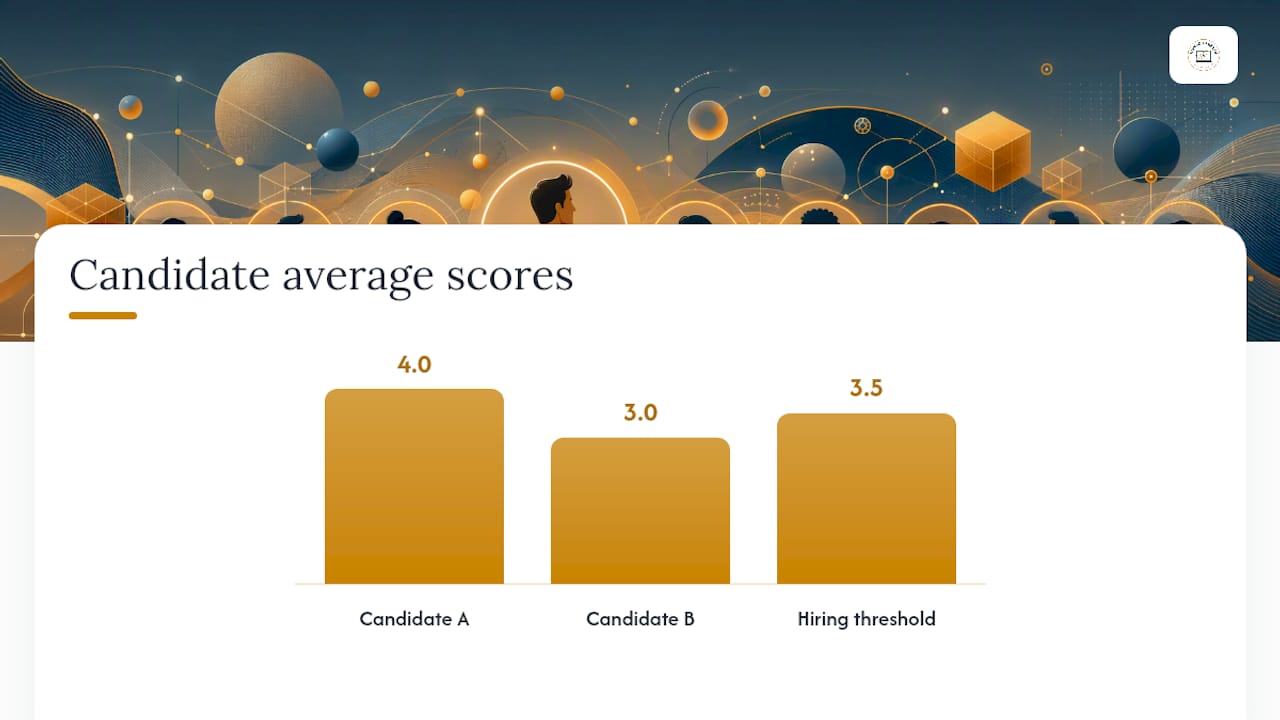
| Category | Candidate A | Candidate B |
|---|---|---|
| Self-management | 4 | 3 |
| Async communication | 5 | 2 |
| Collaboration | 3 | 4 |
| Time zones | 4 | 3 |
Set a threshold before the interview, not after. A common approach: no single category score below 3, and an average across all categories asked of at least 3.5. Candidates who score high on technical skill but repeatedly land 1s and 2s on self-management or boundaries tend to look great on paper and struggle within the first quarter. Structured scoring like this also reduces bias between interviewers when more than one person is evaluating the same candidate pool.
Running the Interview: Tech Checklist and Interviewer Habits
Test your platform, microphone, webcam, and shared screen environment at least 24 hours before the interview, not ten minutes before. That buffer gives you time to fix a driver issue, switch to a backup link, or move to a different room if the lighting or noise is wrong. National Careers Service guidance recommends this same lead time for both live and pre-recorded video interviews, and Microsoft’s own hiring guidance adds accessibility accommodations and troubleshooting steps to the same pre-interview checklist. For technical rounds involving a shared coding environment, that prep matters even more. Testing the exact tool you’ll use, whether that’s CoderPad, HackerRank, or a shared IDE, catches platform quirks before they eat into interview time.
Before you open the call, run through this short list:
-
Confirm the platform link works and have a backup dial-in ready
-
Test audio and video quality in the actual room you’ll interview from
-
Note any accommodation the candidate has requested and confirm you’re set up for it
-
Share your evaluation criteria with the candidate at the start, so they know what a strong answer looks like
That last point matters more than it sounds. Telling a candidate up front that you’re listening for specific examples and systems, not polished generalities, tends to produce sharper, more honest answers from everyone.
Pro Tip: Narrate your own thinking between questions (“I’m going to dig into how you handle handoffs next”) and pause a beat longer than feels natural after each answer. Remote video strips out the small nonverbal cues that normally tell a candidate you’re done listening, so a deliberate pause does that job instead.
For panel interviews, assign each interviewer two or three categories instead of all six. It keeps scoring focused and avoids six people asking the same async communication question in six different ways.
Where Nomad Careers Fits Into Your Remote Hiring Kit
Building a question bank is only half the job. Nomad Careers exists to solve the other half: getting candidates who are genuinely built for remote work into your pipeline in the first place, through a job board of manually verified, work-from-anywhere listings with no spam and no bait-and-switch hybrid roles disguised as remote.
Pair your scorecard with the Remote Resume Guide, which shows candidates how to surface systems and measurable outcomes on paper before they ever reach an interview. That means your applicant pool arrives pre-filtered for the same signals your questions are designed to test. The Remote Job Application Checklist works well as a companion resource for interviewers who also field candidate questions about what a legitimate remote process looks like.
Sources
FAQ
What Are the 5 C’s of Interviewing?
Definitions vary across hiring guides, but a common version covers competence, character, chemistry, culture fit, and communication. For remote roles, communication and character (particularly self-management and follow-through) tend to carry the most predictive weight.
What Is the 30-60-90 Rule in an Interview?
It refers to a candidate’s initial plan outlining what they’ll accomplish in their first month and their first quarter on the job. Asking a remote candidate to sketch this out reveals how they think about async onboarding and building visibility without an office to lean on.
What Are the Hardest Remote Interview Questions?
The hardest questions are usually the ones asking for a specific failure and what changed afterward, such as describing a missed deadline while working alone or a miscommunication that damaged trust with a remote teammate. They’re hard because they can’t be answered with a rehearsed, generic response.
How Many Remote-Specific Questions Should I Ask?
Ask 8 to 12 remote-specific questions per interview round, spread across at least three of the six core categories: self-management, async communication, collaboration, technical setup, time zones, and boundaries.
What’s the Difference Between Screening Hybrid and Fully Remote Candidates?
Fully remote candidates need strong self-management, async communication, and boundary-setting since there’s no office rhythm to rely on. Hybrid candidates can lean more on in-person collaboration, so questions about building trust and staying visible across the days they’re off-site matter more than deep async or time-zone probes.