The best travel credit cards in 2026 depend almost entirely on how you travel, not on which card has the longest list of benefits. For most travelers, five cards cover the full range of needs: the Chase Sapphire Preferred® Card for flexible beginners, the Chase Sapphire Reserve® for frequent travelers who want lounge access and a $300 annual travel credit, the Capital One Venture X Rewards Credit Card for premium perks at a lower fee, The Platinum Card® from American Express for heavy travelers who will use every credit, and the Capital One Venture Rewards Credit Card for anyone who wants simple, flat-rate miles with no category management. NerdWallet’s 2026 roundup organizes top picks by traveler type precisely because no single card wins for everyone.
Quick picks:
- Chase Sapphire Preferred® — best for flexible rewards beginners
- Chase Sapphire Reserve® — best for frequent travelers who use lounge access
- Capital One Venture X — best for premium perks at a mid-range fee
- Amex Platinum — best for heavy travelers who maximize every credit
- Capital One Venture — best for flat-rate simplicity
- Amex Gold Card — best for food-focused travelers
- Chase Freedom Unlimited® — best no-annual-fee pairing card
- Discover it® Miles — best for fee-averse first-year value
Table of Contents
- How do the top travel cards compare at a glance?
- Top picks by category: which card fits your travel style?
- How to choose the best travel credit card for your travel style
- How we picked these cards: criteria, sources, and freshness
- Using travel credit cards as a digital nomad or long-term remote traveler
- Key Takeaways
- Why the “best card” framing misses the point
- Nomadcareers: financial tools for the location-independent life
How do the top travel cards compare at a glance?
The table below covers the cards most frequently cited in 2026 expert roundups. Bonus offers and rates change; always verify current terms on the issuer’s rates and fees page before applying.
| Card | Best for | Annual fee | Typical welcome bonus | Core earn rates | Transfer partners | Notable perks | Foreign transaction fee | Credit score |
|---|---|---|---|---|---|---|---|---|
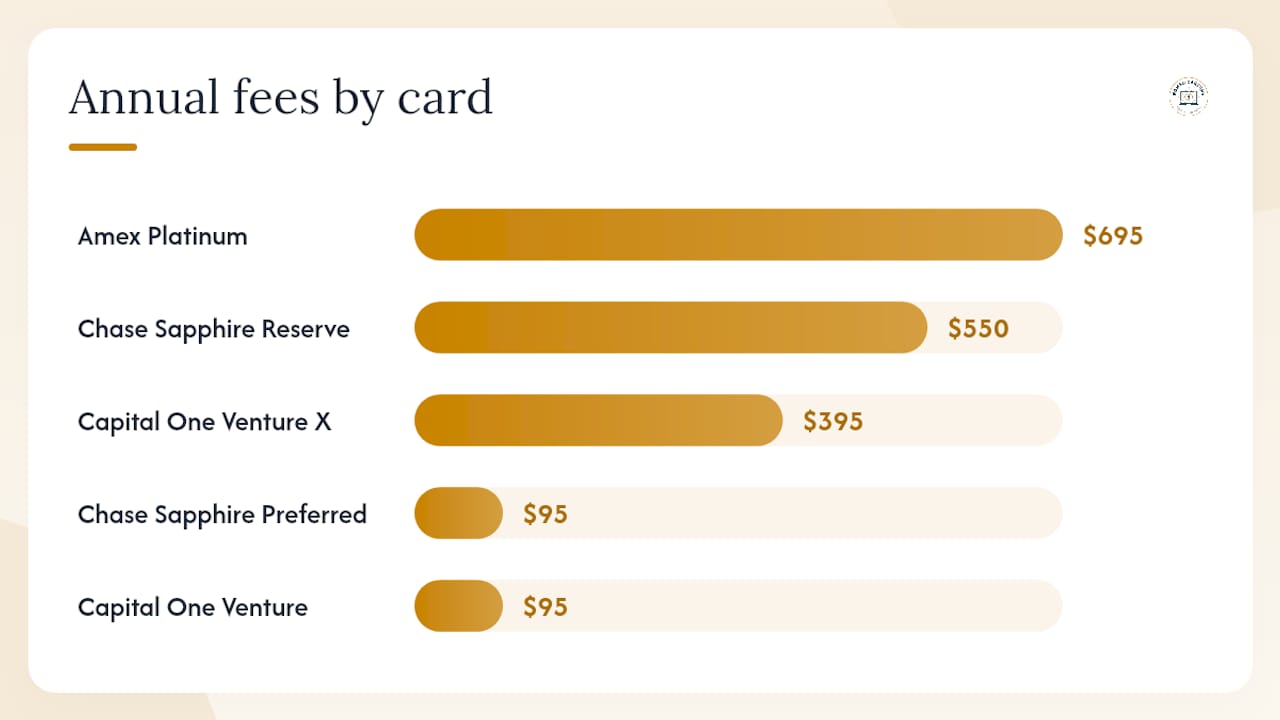
| Chase Sapphire Preferred® | Flexible beginners | $95 | ~60,000–75,000 pts | 3x dining, 2x travel | 14 airline/hotel partners | Trip delay, primary auto rental | None | Good–Excellent (670+) |
| Chase Sapphire Reserve® | Frequent travelers, lounge access | $550 | ~60,000–75,000 pts | 3x travel & dining | 14 airline/hotel partners | $300 travel credit, Priority Pass | None | Excellent (720+) |
| Capital One Venture Rewards | Flat-rate simplicity | $95 | ~75,000 miles | 2x all purchases | 15+ airline/hotel partners | TSA PreCheck/Global Entry credit | None | Good–Excellent (670+) |
| Capital One Venture X | Premium perks, lower fee | $395 | ~75,000 miles | 2x all, 5x flights, 10x hotels via portal | 15+ airline/hotel partners | $300 travel credit, lounge access, anniversary miles | None | Excellent (720+) |
| Amex Platinum | Heavy travelers, credit maximizers | $695 | ~80,000–150,000 pts | 5x flights (direct/Amex Travel), 5x hotels (Amex Travel) | 20+ airline/hotel partners | Centurion lounges, $200 airline fee credit, multiple statement credits | None | Excellent (720+) |
| Amex Gold Card | Dining and grocery spenders | $325 | ~60,000–90,000 pts | 4x dining, 4x U.S. supermarkets | 20+ airline/hotel partners | $120 dining credit, $120 Uber Cash | None | Good–Excellent (670+) |
| Chase Freedom Unlimited® | No-fee pairing card | $0 | ~$200 cash back or pts | 1.5x all purchases | Via Chase Sapphire pairing | No annual fee | None | Good (670+) |
| Discover it® Miles | Fee-averse, first-year value | $0 | Discover Match™ (first-year miles doubled) | 1.5x all purchases | None (statement credit redemption) | First-year miles match | None | Fair–Good (580+) |
| Southwest Rapid Rewards® Premier | Domestic Southwest flyers | $99 | ~50,000–85,000 pts | 3x Southwest, 2x hotel/car partners | Southwest only | Companion Pass progress | None | Good–Excellent (670+) |
| Delta SkyMiles® Platinum Amex | Frequent Delta flyers | $350 | ~50,000–90,000 miles | 3x Delta, 2x restaurants/U.S. supermarkets | Delta/SkyTeam | Priority boarding, companion certificate | None | Good–Excellent (670+) |
| United Quest℠ Card | United loyalists | $250 | ~60,000–80,000 miles | 3x United, 2x dining/travel | United/Star Alliance | 2 x $125 United credits, seat upgrades | None | Good–Excellent (670+) |
| Hilton Honors Amex Card | Hilton loyalists | $0 | ~70,000–100,000 pts | 7x Hilton, 5x U.S. restaurants/supermarkets | Hilton only | Hilton Silver status | None | Good (670+) |
| IHG One Rewards Premier | IHG loyalists | $99 | ~140,000–165,000 pts | 26x IHG, 5x travel/dining | IHG only | Anniversary free night, Platinum Elite status | None | Good–Excellent (670+) |
| Marriott Bonvoy Boundless® | Marriott loyalists | $95 | ~3–5 free night awards | 6x Marriott, 3x gas/groceries/dining | Marriott/SPG | Anniversary free night, Silver Elite status | None | Good–Excellent (670+) |
| Citi Strata Premier® | Multi-category everyday spenders | $95 | ~60,000–75,000 pts | 3x air, hotels, dining, groceries, gas | 15+ airline partners | Annual hotel benefit | None | Good–Excellent (670+) |
| Wells Fargo Autograph® | No-fee category rewards | $0 | ~20,000–30,000 pts | 3x travel, dining, gas, transit, streaming | Limited | Cell phone protection | None | Good (670+) |
| PenFed Pathfinder® Rewards Visa Signature® | Credit union members | $0 (with PenFed checking) | Varies | 4x travel (with checking), 1.5x all | Limited | Travel credits for members | None | Good (670+) |
| United℠ Explorer Card | Casual United flyers | $0 intro, then $95 | ~50,000–60,000 miles | 2x United, dining, hotels | United/Star Alliance | 2 United Club passes/year, free checked bag | None | Good–Excellent (670+) |
| Capital One Venture X Business | Business travelers | $395 | ~150,000 miles | 2x all, 5x flights, 10x hotels via portal | 15+ airline/hotel partners | $300 travel credit, lounge access | None | Excellent (720+) |
| Citi Strata Elite℠ Card | High-spend travelers | $595 | Varies | Elevated multi-category earn | 15+ airline partners | Premium travel credits, lounge access | None | Excellent (720+) |
| Capital One VentureOne Miles Boost | Low-spend, no-fee travelers | $0 | ~20,000 miles | 1.25x all (boosted on select categories) | 15+ airline/hotel partners | No annual fee | None | Good (670+) |
| Wells Fargo Autograph Journey℠ | Hotel and airline spenders | $95 | ~60,000 pts | 5x hotels, 4x airlines, 3x dining | Select airline partners | $50 annual airline credit | None | Good–Excellent (670+) |
| Amex Platinum Card® | Premium credit maximizers | $695 | ~80,000–150,000 pts | 5x flights and Amex Travel hotels | 20+ airline/hotel partners | Full Centurion lounge access, extensive credits | None | Excellent (720+) |
Offers change frequently. Verify current rates, fees, and bonus terms directly on each issuer’s website before applying.
Top picks by category: which card fits your travel style?
Premium cards
Chase Sapphire Reserve® earns 3x points on travel and dining, carries a $550 annual fee, and offsets a large portion of it with a $300 annual travel credit that applies automatically to nearly any travel purchase. Access to Priority Pass lounges and strong trip delay and cancellation protections make it genuinely useful for travelers who fly more than four or five times a year. The $550 annual fee is partially offset by a $300 travel credit, which reduces the effective fee for many travelers, and the 14 Chase Ultimate Rewards transfer partners — including United, Hyatt, and British Airways — give points real flexibility. Apply if you spend heavily on travel and dining and want a card that works well as a standalone.

The Platinum Card® from American Express carries a high annual fee and lists a broad slate of statement credits that, for cardholders who use them, can exceed the fee. Centurion Lounge access, a $200 airline fee credit, Hilton and Marriott Gold status, and credits for Uber, Saks, and digital entertainment are among the benefits. The card earns 5x Membership Rewards points on flights booked directly with airlines or through Amex Travel, and 5x on prepaid hotels through Amex Travel. It suits frequent travelers who are willing to track and use multiple credits each year. For those who won’t, the Amex Platinum vs. Sapphire Reserve vs. Venture X comparison makes clear that the fee is hard to justify without active credit utilization.
Mid-tier flexible cards
Capital One Venture X Rewards Credit Card pairs a $395 annual fee with a $300 Capital One Travel credit and anniversary miles that together can offset the fee for most users. It earns 2x miles on all purchases, 5x on flights booked through Capital One Travel, and 10x on hotels and rental cars through the portal. Lounge access through Capital One Lounges and Priority Pass is included. Yahoo Finance’s 2026 analysis highlights Venture X as a strong premium-value pick precisely because the credits are straightforward to use. It suits travelers who want premium perks without the complexity of managing a dozen separate credits.
Chase Sapphire Preferred® Card is the entry point for serious travel rewards. At $95 per year, it earns 3x on dining, 2x on travel, and shares the same 14 Ultimate Rewards transfer partners as the Reserve. The welcome bonus is typically strong relative to the fee. Beginners who want to learn transfer-partner redemptions without committing to a high annual fee will find it the most forgiving starting point.
American Express® Gold Card earns 4x on dining and 4x at U.S. supermarkets, making it the strongest card for food-heavy spenders. The $325 annual fee is offset by a $120 dining credit and $120 in Uber Cash annually. It connects to the full Amex Membership Rewards transfer network, so points earned on groceries can become airline miles.
Flat-rate and simple cards
Capital One Venture Rewards Credit Card earns unlimited 2x miles on every purchase with no category tracking required. Miles redeem as statement credits against travel purchases or transfer to 15+ airline and hotel partners. The $95 annual fee is easy to offset for anyone who spends regularly. This is the card for travelers who want rewards without a spreadsheet.
Citi Strata Premier® Card earns 3x points on air travel, hotels, dining, groceries, and gas, covering most everyday spending categories at a bonus rate. The $95 annual fee and a 15+ airline transfer partner list make it a strong alternative for travelers who want category bonuses without committing to a single issuer’s ecosystem.
Wells Fargo Autograph Journey℠ Card earns 5x on hotels, 4x on airlines, and 3x on dining, with a $95 annual fee and a $50 annual airline credit. It suits travelers who concentrate spending on hotels and flights and want a straightforward mid-tier option outside the Chase/Amex ecosystems.
No-annual-fee cards
Chase Freedom Unlimited® earns 1.5x on all purchases with no annual fee. Its real power comes from pairing: when held alongside a Chase Sapphire card, Freedom Unlimited points convert to transferable Ultimate Rewards points. The Points Guy consistently recommends this pairing as one of the highest-value strategies for everyday earners who also hold a premium card.
Discover it® Miles earns 1.5x miles on all purchases and doubles every mile earned in the first year through the Discover Match™ program, effectively making it a 3x card for year one. There is no annual fee and no foreign transaction fee. It suits travelers who are new to rewards cards and want a risk-free first year.
Wells Fargo Autograph® Card earns 3x on travel, dining, gas, transit, and streaming with no annual fee. Cell phone protection is a useful bonus. It covers more categories than most no-fee competitors and works well as a standalone for value-minded travelers.
Capital One VentureOne Rewards Credit Card Miles Boost earns 1.25x on all purchases with no annual fee and connects to Capital One’s transfer partner network. It suits low-spend travelers who want the flexibility of transferable miles without a fee commitment.
Airline co-branded cards
Southwest Rapid Rewards® Premier Credit Card earns points toward the Southwest Companion Pass, which allows a designated companion to fly with you on every flight for the remainder of the calendar year plus the following year. At $99 per year, it is the right card for frequent domestic Southwest flyers who want to accelerate Companion Pass progress.
Delta SkyMiles® Platinum American Express Card earns 3x on Delta purchases and 2x at restaurants and U.S. supermarkets. The $350 annual fee includes a companion certificate, priority boarding, and Delta-specific statement credits. It suits frequent Delta flyers who value on-airline perks over flexible redemptions.
United Quest℠ Card earns 3x on United purchases and 2x on dining and travel. Two $125 United travel credits per year and seat upgrade priority make it the strongest United co-branded option for loyalists who fly United regularly. The $250 annual fee is largely offset by the credits for frequent United flyers.
United℠ Explorer Card is the entry-level United option at $0 intro then $95 per year. It includes two United Club passes annually, a free checked bag, and 2x on United, dining, and hotels. Casual United flyers who want airline perks without a high fee will find it sufficient.
Hotel co-branded cards
Hilton Honors American Express Card carries no annual fee and earns 7x at Hilton properties, 5x at U.S. restaurants and supermarkets, and 3x elsewhere. Hilton Silver status is included. It is the right starting point for Hilton loyalists who want hotel benefits without a fee.
IHG One Rewards Premier Credit Card earns 26x at IHG properties and includes an anniversary free night and Platinum Elite status for $99 per year. The welcome bonus is typically one of the largest in the hotel card category. Heavy IHG users will find the math straightforward.
Marriott Bonvoy Boundless® Credit Card earns 6x at Marriott properties and includes an anniversary free night award and Silver Elite status for $95 per year. Marriott loyalists focused on accumulating award nights will find the annual free night alone covers the fee at most mid-tier properties.
Business travel
Capital One Venture X Business mirrors the consumer Venture X with a $395 annual fee, $300 travel credit, 2x on all purchases, 5x on flights, and 10x on hotels through the Capital One Travel portal. Lounge access and anniversary miles are included. It suits business travelers who want premium perks with straightforward expense reporting and no foreign transaction fees.
Citi Strata Elite℠ Card targets high-spend travelers with elevated multi-category earn rates, premium travel credits, and lounge access at a $595 annual fee. It suits frequent business travelers who concentrate significant spend across travel and everyday categories.
PenFed Pathfinder® Rewards Visa Signature® Card earns 4x on travel for members with a PenFed checking account and 1.5x on all other purchases, with no annual fee for qualifying members. It is a competitive option for credit union members who want travel rewards without the fee structure of major bank cards.
How to choose the best travel credit card for your travel style
Match the card to your dominant travel behavior. Frequency, brand loyalty, spending categories, and willingness to track credits are the four variables that determine which card delivers the most value.
Two decision steps:
-
Check eligibility and application rules first. Most premium travel cards require good to excellent credit (typically 670+ FICO, with premium cards often requiring 720+). Check issuer-specific rules before applying — some issuers limit approvals based on recent card openings, and applying for multiple cards in a short window generates hard inquiries that can affect your score. Confirm you are not disqualified from a welcome bonus due to a prior card relationship with the same issuer.
-
Calculate your effective annual fee. Subtract the statement credits you will realistically use from the sticker annual fee. A $550 Chase Sapphire Reserve® has a $300 travel credit that substantially reduces the out-of-pocket fee for many cardholders. An Amex Platinum at $695 can drop significantly for travelers who use the airline fee credit, Uber Cash, and dining credits. Forbes Advisor’s 2026 analysis notes that premium card value is often front-loaded in year one via large welcome bonuses, so the effective cost in year two and beyond depends on how consistently you use category bonuses and credits.
Red flags and eligibility reminders:
- Carrying a balance eliminates rewards value. NerdWallet’s guidance is direct: interest charges typically exceed any rewards earned, so disciplined monthly payoff is a prerequisite for net benefit.
- Welcome bonuses require legitimate qualifying purchases. Plan large planned expenses — flights, rent, services — to meet spend thresholds naturally.
- Issuer-specific application limits (such as Chase’s informal limits on recent approvals) can disqualify you from a bonus even if you are approved for the card.
- Co-branded airline and hotel cards lock your points into a single program. If your travel patterns shift, those points may lose value.
Pro Tip: Pair a premium travel card with a no-annual-fee flat-rate card. Use the premium card for travel and dining where it earns the most, and the no-fee card for everything else. The Chase Sapphire Reserve® paired with the Chase Freedom Unlimited® is one of the most cited combinations in expert roundups because Freedom Unlimited points transfer to Ultimate Rewards when you hold a Sapphire card.
How we picked these cards: criteria, sources, and freshness
Cards were evaluated across six dimensions: welcome bonus value relative to annual fee, rewards earning versatility across spending categories, transfer partner depth and flexibility, premium perks that offset the stated fee, effective net cost after credits, and foreign transaction fee policy. Cards with no foreign transaction fees were weighted positively for travelers who spend internationally.
Methodology note: Rankings reflect editorial judgment based on publicly available issuer terms, 2026 expert roundups from NerdWallet, Forbes Advisor, The Points Guy, Yahoo Finance, and The Motley Fool, and the principle that card value must be assessed against a realistic user profile — not a best-case scenario. Offers, bonus amounts, and credit terms change frequently. This article was last reviewed in 2026. Always check the issuer’s current rates and fees page before applying, as welcome bonuses and annual fees are subject to change without notice.
Primary sources used: issuer product pages (Chase, Capital One, American Express, Citi, Wells Fargo, Discover, Southwest, Delta, United, Hilton, IHG, Marriott, PenFed), NerdWallet, Forbes Advisor, The Points Guy, Yahoo Finance, and The Motley Fool.
Using travel credit cards as a digital nomad or long-term remote traveler
Travel credit cards are practical tools for digital nomads, but the selection criteria shift when you are abroad for months at a time rather than taking two or three annual trips.
Key considerations for long-term remote travelers:
- Foreign transaction fees are non-negotiable. Every card on this list charges no foreign transaction fees, which is the baseline requirement for anyone spending regularly outside the United States. A card that charges 3% on foreign purchases costs a meaningful amount annually on typical nomad spending.
- Virtual card compatibility matters. Some issuers offer virtual card numbers for online purchases, which reduces fraud exposure when using cards across multiple countries and payment systems. Check your issuer’s app before relying on a card for recurring remote-work expenses.
- Welcome-bonus timing is a real advantage. Large planned expenses — a flight to a new base, a co-working membership, or a visa application fee — can help meet welcome-bonus spend thresholds naturally. Align your card application with a period of known high spend. Nomadcareers’s remote job checklist includes guidance on planning large work-related expenses, which can double as bonus-qualifying spend.
- Multi-currency banking reduces friction. A travel rewards card handles spending, but a multi-currency bank account handles income. Pairing a strong travel card with an account that supports international transfers without high fees is the standard setup for long-term nomads. See Nomadcareers’s guide to international banking for account options that complement travel card use.
- Recurring remote-work expenses count. Software subscriptions, co-working memberships, and client invoicing platforms all generate card spend. Routing these through a card with a strong flat-rate or category bonus accelerates earning without changing spending behavior.
Pro Tip: If you are planning an extended stay in a new country, time your card application two to three months before departure. Use the welcome-bonus spend window to cover flights, accommodation deposits, and any visa-related fees. Check Nomadcareers’s digital nomad visa guide to identify which countries require upfront financial proof — some of those costs can count toward your spend threshold.
Rewards cards are spending tools, not financing instruments. Carrying a balance abroad while earning miles is a losing trade in almost every scenario.
Key Takeaways
The right travel card is the one whose credits you will actually use and whose fee you can offset with realistic spending.
| Point | Details |
|---|---|
| Match card to travel frequency | Frequent travelers benefit from premium cards; occasional travelers get more value from mid-tier or no-fee options. |
| Calculate effective annual fee | Subtract usable statement credits from the sticker fee — a $550 Reserve becomes significantly less after a substantial travel credit. |
| Pairing beats single-card strategies | A premium card plus a no-fee flat-rate card covers both high-earning categories and everyday spend without overpaying in fees. |
| Carrying a balance erases rewards | Interest charges typically exceed rewards value; pay in full each month or the math does not work. |
| Nomadcareers resources support card planning | Nomadcareers’s guides on international banking, nomad visas, and remote job planning help align card timing and spend with real nomad financial decisions. |
Why the “best card” framing misses the point
The conventional wisdom on travel credit cards is that there is a definitive winner — a single card that beats all others. Every major roundup, including this one, is structured around a ranked list, which reinforces that framing. But the more useful observation is that the gap between a well-chosen mid-tier card and a poorly chosen premium card is far larger than the gap between any two premium cards.
A traveler who applies for the Amex Platinum because it has the highest stated value, then uses only the airline fee credit and ignores the Uber Cash, Saks credit, and dining credits, is paying $695 for roughly $200 in annual benefit. The same traveler with a Chase Sapphire Preferred® and a Chase Freedom Unlimited® would likely come out ahead on net value, with less complexity and a fraction of the fee.
The cards that appear at the top of every 2026 roundup are there because they offer the most value to the most people who choose them deliberately. That is a different claim than “these are the best cards.” The best card is the one you will actually use correctly — and that requires an honest assessment of your travel patterns, your willingness to track credits, and your ability to pay in full each month. Beginners who prioritize flexible transfer partners and frequent travelers who prioritize immediate statement credits are making equally rational choices for different situations, as NerdWallet’s segmented approach reflects.
Nomadcareers: financial tools for the location-independent life
Travel credit cards are one piece of the financial picture for remote workers and digital nomads. The other pieces — finding verified remote work, understanding visa requirements, and managing international finances — are where Nomadcareers focuses.

Nomadcareers is a manually verified remote job board built specifically for work-from-anywhere roles. Every listing is checked for quality and legitimacy, which means you spend less time filtering out location-restricted or low-quality postings and more time applying to roles that genuinely support a nomadic lifestyle. If you are building the financial foundation that makes a travel rewards card worth holding, starting with a verified remote income is the practical first step. Browse verified remote jobs on Nomadcareers, or explore the nomad visa guide to plan your next extended stay.