Time zone friendly scheduling means pairing an async-first operating agreement with a rotation system for the meetings and interviews that must happen live. Employers should publish response windows, protect unavailable hours, and offer candidates real scheduling choices rather than a single fixed slot. Nomad Careers builds its own verified hiring process around this model, and the underlying logic tracks closely with ILO guidance on telework autonomy.
TL;DR:
Offering two to three time-zone-spread interview slots and explicitly stating geographic restrictions help attract diverse candidates and reduce scheduling bias.
Rotating the responsibility for handling inconvenient meeting times and tracking coordination work prevent overburdening specific team members.
Establishing a clear, written async operating agreement with response windows, decision records, and meeting criteria ensures fairness and consistency across distributed teams.
Anchoring recurring meetings to local time zones rather than fixed UTC offsets prevents disruptions caused by daylight saving time changes.
Providing transparent scheduling procedures, including accommodation requests and next-step confirmations, builds candidate trust and improves overall fairness.
Core Principles Behind Time Zone Friendly Scheduling
Good scheduling across time zones starts with a default: async first, meetings second. The World Economic Forum recommends exhausting asynchronous collaboration, documents, recorded updates, threaded comments, before anyone books a synchronous call. That default matters because a 2024 study in Organization Science covering more than 12,000 employees found something counterintuitive: as temporal distance between colleagues grows, synchronous communication drops off sharply, but asynchronous volume does not automatically rise to fill the gap. Distance doesn’t create good async habits on its own. Someone has to design them.
A few principles hold that design together:
-
Gate meetings behind a real question: could this be answered in a shared document with a deadline instead?
-
Match the communication channel to the task. Complex negotiations need richer, often synchronous, exchange; status updates rarely do.
-
Protect disconnect time. The ILO’s guidance on telework is explicit that autonomy over working hours only works when paired with defined deliverables and response expectations, not an unspoken assumption of constant availability.
-
Rotate who absorbs the inconvenient hours. Someone bridging time zones is doing coordination labor that deserves recognition, not a permanent tax.
Pro Tip: Before scheduling any recurring cross-time-zone meeting, ask whether a written update with a 24-hour comment window would work instead. If the answer is yes more than half the time, the meeting probably shouldn’t exist in its current form.
Running Fair Interviews Across Time Zones
Interview scheduling is where most companies quietly lose global candidates, usually before an offer is ever on the table. SHRM’s research on scheduling automation points to a simple fix: combined-availability tools that let candidates pick a slot themselves cut down the email back-and-forth that disproportionately punishes people in distant time zones.
Build the process around these steps:
-
Offer self-scheduling or two to three real options. A single 9 a.m. Eastern slot isn’t a choice; it’s a filter that quietly excludes half the planet.
-
Standardize your confirmation message. Include the time in the candidate’s own zone, the format of the interview, and who to contact for accommodations.
-
Invite accommodation requests explicitly. Don’t make candidates guess whether asking for a different time will hurt their chances.
-
Test async skills directly. Add a written status-update exercise or a handoff simulation where the candidate documents a task for someone in a different time zone to pick up. This measures the actual job, not just willingness to join an odd-hour call.
-
Rotate panel times. If your hiring managers sit in New York, don’t let every candidate outside the Americas absorb the inconvenience.
A comprehensive body of interview-scheduling research also flags something easy to overlook: candidate perception of fairness often hinges on small operational details, a clear geographic restriction stated in the job post, a confirmed next step, a named contact for rescheduling, rather than the schedule itself being perfectly convenient. Opacity, not inconvenience, is what erodes trust.
Nomad Careers’ remote hiring process applies this same logic: transparent timing details up front, so candidates know what they’re walking into before they invest time in an application.
Building an Async Operating Agreement
An async operating agreement is the document that keeps a distributed team from reinventing its own rules every sprint. CIPD’s 2024 hybrid working guidance recommends teams explicitly agree on communication norms rather than let them emerge by accident, and that agreement should live somewhere everyone can find it, not in a manager’s head.
At minimum, put these in writing:
-
Channel purpose. Docs for decisions, chat for quick coordination, email for anything requiring a paper trail.
-
Response windows by channel and urgency. A same-day expectation for chat, 24 to 48 hours for docs, and a defined “true emergency” escalation path that bypasses normal windows.
-
Decision records. Every meeting or async thread that ends in a choice gets a short written record, with an owner named for the resulting handoff.
-
Meeting exceptions. Spell out what actually qualifies for a live meeting (conflict resolution, ambiguous negotiation, relationship building) and who has authority to call one.
-
Published unavailable hours. Personal calendars should show protected time clearly enough that no one has to ask.
GOV.UK’s Digital Service ran a meeting-free week experiment and found the biggest risk wasn’t lost focus, it was tasks stalling because no one had been named the owner. An async agreement without named owners for each handoff just shifts the confusion from live meetings to Slack threads.
Pro Tip: Store your operating agreement in the same tool your team already checks daily. A policy in a forgotten wiki page might as well not exist.
Tools that structure shared inboxes and message routing, like the approach SendSync describes for asynchronous team communication, can make these response windows enforceable rather than aspirational.
Rotating the Burden Fairly
Someone on every distributed team ends up bridging the time zones nobody else wants to touch, and research on temporal brokerage shows that role carries a real cost. Mell, Jang, and Chai’s study in Organization Science found that employees who connect time-zone-separated subgroups absorb extra coordination work that’s easy for management to miss entirely, because it doesn’t show up as a line item anywhere.
Fixing that means making the burden visible and shared:
-
Name the specific slots that are undesirable (before 7 a.m. or after 8 p.m. local) and publish a rotation cadence for who takes them.
-
Rotate the coordination role itself, not just the meeting time, and count that time in workload planning.
-
Record every live decision and circulate a written summary within hours, not days, for anyone who missed the call.
-
Have managers actively track who’s absorbing brokerage work across quarters, not just weeks, since the pattern tends to repeat with the same people by default.
The failure mode to watch for is subtle: a rotation that looks fair on paper but keeps landing on the same region because nobody is tracking outcomes over time.
Shift Planning and Coverage Across Time Zones
Coverage-based roles, support, operations, on-call engineering, need a different sequence than knowledge-work scheduling. Map obligations first, availability second. Start with your actual SLA: what hours must be covered, and at what response speed? Only after that’s defined should you lay employee availability on top of it.
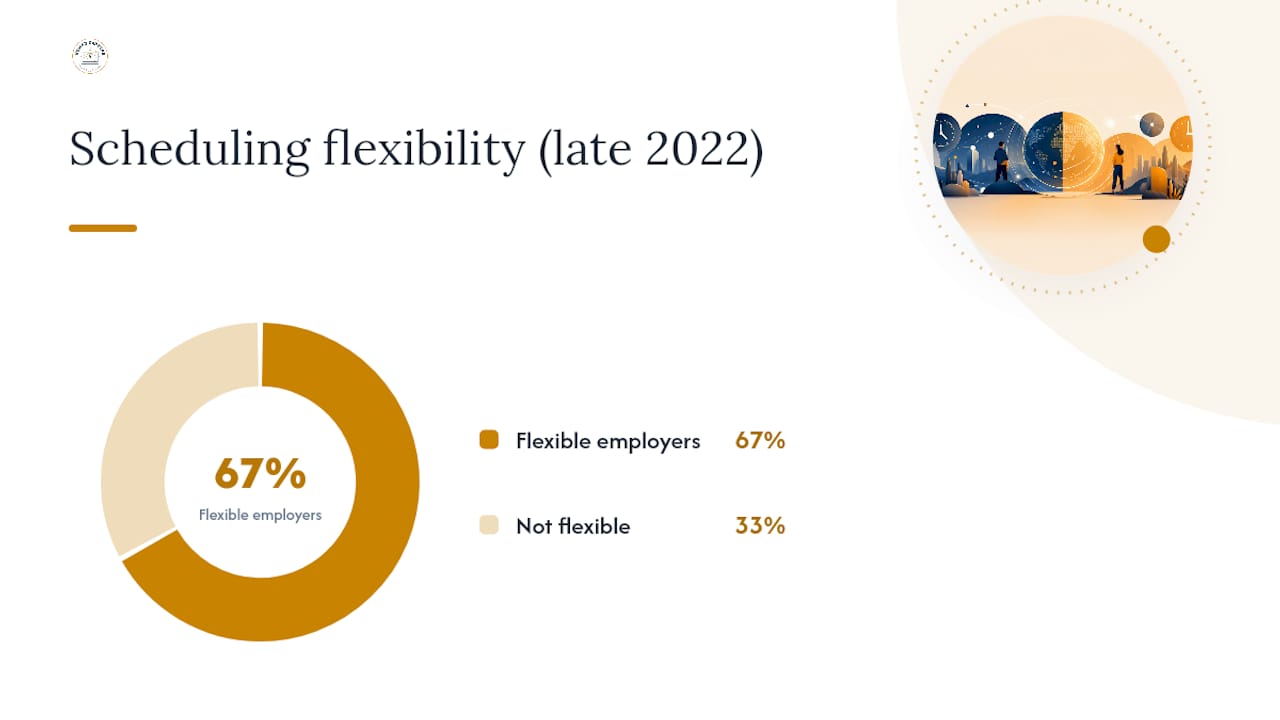
By late 2022, 67% of employers were offering complete or partial scheduling flexibility, which sounds generous until you consider that flexibility without structure just pushes the coverage gap onto whoever is least able to say no.
Practical moves that keep coverage schedules equitable:
-
Rotate the least desirable coverage windows the same way you’d rotate meeting slots.
-
Publish compensatory policies, shift premiums, banked time off, or swap mechanisms, before disputes come up, not after.
-
Adopt no-meeting days or reduced-meeting windows for roles that need deep, uninterrupted focus outside their coverage hours.
-
Keep rosters visible to the whole team and review the fairness of the rotation on a set schedule, not just when someone complains.
Daylight saving time shifts deserve a specific line in your policy too. A meeting anchored to a fixed UTC offset drifts by an hour twice a year for teammates in regions that observe the change, while colleagues in non-observing zones don’t move at all. Anchor recurring meetings to a named local time zone in your calendar tool, not a UTC offset, so the tool handles the shift automatically instead of quietly confusing half the invite list every March and November.
Your Time Zone Friendly Scheduling Checklist
Put these into practice before your next hiring round or sprint planning cycle:
-
Interview scheduling: Self-schedule link, two to three time-zone-spread slots, a confirmation message with an explicit accommodation route.
-
Team operating rules: Published async agreement, a named rotation owner for coordination duties, at least one no-meeting day per week.
-
Coverage planning: Map SLAs, then availability, then rotation, then publish the compensatory policy alongside it.
-
Candidate experience: State any geographic restrictions in the job post itself, and confirm next steps and timing in writing after every stage.
Roughly two in three employers already offer some form of scheduling flexibility. The gap that remains isn’t policy, it’s structure: turning flexibility into rules everyone can actually follow.
Sources
FAQ
What Is Time Zone Friendly Scheduling?
It’s the practice of designing interviews, meetings, and shift coverage so no single time zone permanently absorbs the inconvenience. That means async-first workflows, rotated live meetings, and published unavailable hours, an approach grounded in ILO telework guidance.
How Many Interview Time Slots Should I Offer Candidates?
Offer at least two to three realistic options spread across different hours, not a single fixed slot. SHRM’s scheduling research also recommends stating any geographic restrictions in the job post itself so candidates aren’t surprised later.
Who Should Handle the Inconvenient Meeting Times?
Rotate it. Research on temporal brokerage found that employees bridging time-zone-separated teams absorb extra coordination work that often goes unrecognized if managers don’t track and rotate it deliberately.
Does Daylight Saving Time Break Recurring Meeting Schedules?
It can, if meetings are set to a fixed UTC offset instead of a named local time zone. Anchoring recurring events to a specific region’s local time lets your calendar tool adjust automatically when that region shifts its clocks.
What Belongs in an Async Operating Agreement?
Channel purposes, response windows by urgency, written decision records with a named owner, and rules for when a live meeting is actually justified. CIPD’s hybrid working guidance recommends teams put these rules in writing rather than let them form by habit.