Yes, but only with three things in place: your employer’s written permission, the correct visa or work authorization for your host country, and a clear handle on your U.S. and local tax obligations. Skip any one of those, and you or your employer could face fines, back taxes, or a canceled visa. The details depend heavily on where you go and how long you stay, but the core requirement never changes.
TL;DR:
- Working remotely abroad requires explicit written employer approval, a valid visa or work permit, and compliance with both U.S. and local taxes.
- Short trips on tourist visas are low-risk but may violate local rules if they involve work activities, especially for longer stays or client-facing roles.
- Digital nomad visas are available in over 60 countries, usually easier to obtain than work permits, but often restrict actual employment activities within the host country.
- U.S. citizens and green-card holders must still pay U.S. taxes on worldwide income, with the Foreign Earned Income Exclusion offering some relief if qualifying conditions are met.
- Classifying as an employee or contractor significantly impacts tax, payroll, and social security obligations, with contractors handling more compliance independently.
Table of Contents
- Can I Work Remotely for a US Company Abroad?
- What Should I Get From My Employer in Writing?
- Which Visa Lets You Work Remotely for a US Employer?
- Do I Still Pay US Taxes While Working Abroad?
- Employee or Contractor: Why It Changes Everything
- Why Employers Push Back, and How to Ease Their Concerns
- Your Pre-Departure Compliance Checklist
- Why Trust This Guide
- Find Roles Built for This, Not Roles You Have to Fight For
- Where to Verify the Rules Yourself
- Sources
- FAQ
- Which US Companies Allow Remote Work Abroad?
- Can I Work Remotely for a US Company Without a Visa?
- Can I Work Abroad if I Work Remotely?
- Can I Work Remotely for a US Company?
Can I Work Remotely for a US Company Abroad?
It depends on how you structure the arrangement. A two-week trip on a tourist visa while you keep logging into Slack is common and low-risk in practice, though technically it can violate the terms of a visitor visa in some countries. A six-month stay is a different animal entirely, and that’s where digital nomad visas, local work permits, and formal employment structures start to matter.
Client-facing roles, regulated professions (law, finance, healthcare), and jobs that involve signing contracts on the company’s behalf carry more restrictions, because activity like that can trigger local licensing rules or tax and employer exposure that a backend engineer or designer wouldn’t create.
Independent contractors generally have an easier path than W-2 employees. A contractor invoices the U.S. company and handles their own local registration and taxes, which sidesteps most of the payroll and permanent establishment issues that make employers nervous. The tradeoff is that contractors carry the full compliance burden themselves, with no HR department managing the paperwork.
What Should I Get From My Employer in Writing?
Most employers require formal, written sign-off before you relocate, and for good reason: unauthorized remote work abroad can expose the company to payroll violations, tax liability in a country it never registered to operate in, and data-security gaps. Ogletree’s employer guidance recommends companies use short-term remote-work agreements specifically to manage this risk, which means your manager saying “sure, go ahead” in a Slack message isn’t enough.
Before you book a flight, get a signed agreement covering:
- The exact country and city where you’ll be working
- Start and end dates, or a review date if the arrangement is open-ended
- How payroll, benefits, and tax withholding will be handled during your stay
- The company’s data-security and device-management requirements
- A named HR or legal contact for questions that come up while you’re there
If your employer hesitates, propose a trial period of 30 to 90 days, or offer to limit your scope to non-client-facing work while abroad. Some employers will move forward with an Employer of Record once you raise it, since an EOR takes on the local employment risk instead of the U.S. company handling it directly.
Which Visa Lets You Work Remotely for a US Employer?
A tourist visa almost never authorizes any form of paid work, remote or otherwise. Enforcement varies widely. Some countries look the other way for a laptop worker who isn’t drawing a local paycheck; others treat it as unauthorized employment regardless of where the paycheck comes from. Don’t assume silence means permission.
More than 60 countries now offer a digital nomad visa built for exactly this situation. These typically require proof of remote employment or income, a minimum monthly earnings threshold, and private health insurance. They’re generally easier to get than a standard work permit, but they usually don’t grant the right to work for a local employer or run a local business.
A traditional work permit is a different track entirely and usually applies when you’re taking a job with a company based in that country, not when you’re staying remote for a U.S. employer.
Practical steps before you apply:
- Check the destination country’s embassy or immigration website directly, not a third-party blog
- Apply early. Digital nomad visa processing can take weeks to months depending on the country
- Keep documentation of your employment relationship (offer letter, pay stubs, employer letter) ready for the application
Do I Still Pay US Taxes While Working Abroad?
Yes. U.S. citizens and green-card holders owe tax on worldwide income no matter where they live or work, and that obligation doesn’t pause the moment you leave the country. The IRS is clear on this point: your filing requirement follows your citizenship or residency status, not your location.
The main relief mechanism is the Foreign Earned Income Exclusion, claimed on Form 2555. For 2026, the exclusion is referenced at $132,900 of foreign earned income, though you have to qualify under one of two tests first:
- Physical Presence Test — you must be physically present in a foreign country or countries for at least 330 full days within any 12-month period.
- Bona Fide Residence Test — you must establish genuine residence in a foreign country for an uninterrupted period that includes a full tax year, judged by factors like intent, local ties, and living arrangements rather than a day count.
Pro Tip: Keep a simple spreadsheet logging every entry and exit date, country by country. The IRS and your host country may both ask for this, and reconstructing six months of travel from memory during an audit is painful.
Your host country runs its own clock, separate from the IRS; understanding Israeli tax residency for foreigners is a good example of how host-country tax rules apply independently. Many countries use a 183-day rule to determine tax residency, and hitting that threshold can make you a local taxpayer even while you’re still filing in the U.S. When both countries claim you, a tax treaty’s tie-breaker provisions usually decide which country gets primary taxing rights. The Foreign Tax Credit often works better than the FEIE if you’re paying meaningful tax locally, since it credits foreign tax paid rather than excluding income outright.
Employee or Contractor: Why It Changes Everything
How you’re classified determines almost every compliance detail that follows, and a contract calling you a “contractor” doesn’t settle it. The IRS looks at behavioral and financial control, not the label in your agreement.
If you’re a W-2 employee, your U.S. employer typically continues federal withholding and may still owe FICA taxes on your wages, even while you’re abroad. Depending on the country, the company might also face local registration or payroll obligations it didn’t have before, using Form W-4 to manage your withholding elections throughout.
As a 1099 contractor, you handle your own Form W-9 reporting, local business registration where required, self-employment tax, and invoicing. Employers often prefer this route precisely because it avoids foreign payroll setup.
Social security is its own trap. Without protection, you could owe contributions in both the U.S. and your host country on the same income. Totalization agreements between the U.S. and dozens of countries prevent this. A Certificate of Coverage from the Social Security Administration proves you’re covered under one system, exempting you from the other.

Why Employers Push Back, and How to Ease Their Concerns
Employers aren’t being difficult when they hesitate. Certain activities, like meeting clients in person, negotiating or signing contracts, or actively soliciting sales in another country, can create a permanent establishment, which lets that country tax the U.S. company’s profits there.
Local labor law adds more exposure: many countries mandate benefits, notice periods, or severance rules that override whatever the U.S. employment contract says the moment work happens within their borders. Add in a company’s IT and data-security policies, and you can see why some employers say no by default rather than evaluate each request.
The practical fixes are well established. Employers use EOR services to legally employ you in-country without registering their own entity, cap remote arrangements to a fixed duration, or restrict your role to exclude the client-facing activities that create PE risk in the first place.
Your Pre-Departure Compliance Checklist
Getting this right takes about four steps, done in order:
- Request written approval from your employer, and confirm your visa or authorization covers the exact work you’ll be doing.
- Consult a tax advisor before you go if you’re staying longer than a few months. A CPA who handles expat filings can flag issues while you can still fix them.
- Collect your documents: employer approval letter, employment contract, recent pay stubs, visa or residence permit, and proof of address in your host country.
- Track your days in-country from day one, and calendar your visa renewal date well before it expires.
Update HR immediately if your plans change, whether that’s extending your stay, switching countries, or shifting from tourist status to a nomad visa. If your situation involves a tax treaty question, a visa denial, or an employer proposing an EOR arrangement, that’s the moment to bring in a specialist rather than guess.
Pro Tip: Set a recurring calendar reminder 60 days before any visa expiration. Immigration offices in popular nomad destinations get backed up, and renewal windows close faster than you’d expect.
Why Trust This Guide
Nomad Careers built its listings around one rule: every job marked “work from anywhere” gets manually verified before it goes live, so you’re not chasing postings that quietly expect you back in an office after 90 days. This guide draws on that same standard, pairing primary sources like IRS filing rules and OECD mobility research with the employer-side realities we see across thousands of verified postings. For deeper reading, check our guides on visa sponsorship and remote work and how remote hiring actually works.
Find Roles Built for This, Not Roles You Have to Fight For
Most job boards slap a “remote” tag on anything without a mandatory office day, then leave you to discover the fine print after you’ve relocated. Nomad Careers only lists roles that are genuinely work-from-anywhere, manually verified before they’re published, with transparent hiring details so you know the employer’s actual stance before you apply.
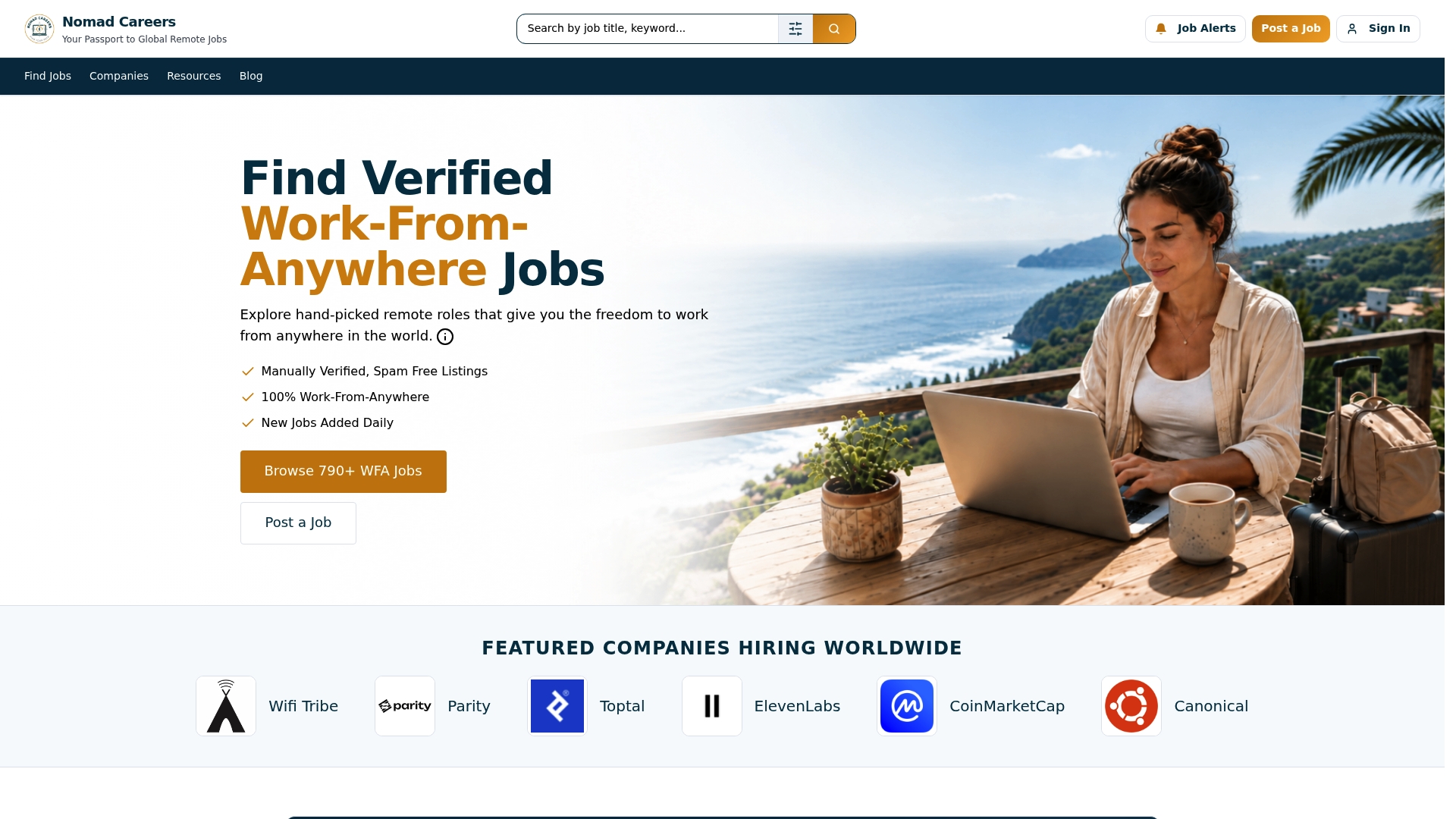
That verification doesn’t replace the steps in this guide. Even a confirmed work-from-anywhere listing still needs employer sign-off on your specific location and a visa that matches your plans. What it does is remove the guessing game of whether the job itself is real. Browse verified work-from-anywhere jobs, or set up job alerts if you’re still narrowing down your next move. If you want a head start on interviews, Nomad Pro Monthly runs $9.99 a month, or $69.99 a year on the annual plan, and unlocks the AI career tools that help you tailor applications to roles that actually match your compliance situation.
Where to Verify the Rules Yourself
- Form 2555 instructions (IRS) for FEIE eligibility and documentation
- Social Security Administration international agreements for totalization details
- OECD global mobility consultation document for cross-border policy context
Sources
- Instructions for Form 2555 - IRS
- OECD — Global mobility of individuals (public consultation document)
- Employee requests to work remotely while abroad: Considerations for employers - Ogletree
- Can I work for a US company and live abroad? Tax rules - LegalClarity
FAQ
Which US Companies Allow Remote Work Abroad?
There’s no fixed list. Policies vary company by company and often role by role within the same company, based on tax exposure, client-facing responsibilities, and whether the employer has legal infrastructure to support workers in a given country. Nomad Careers verifies listings that specifically allow work from anywhere, which is the fastest way to find employers open to this arrangement from the start.
Can I Work Remotely for a US Company Without a Visa?
Not legally, if you’re staying beyond a short visit. Tourist visas rarely authorize any paid work, and enforcement varies by country, but relying on a visa loophole risks fines or deportation. A digital nomad visa or appropriate work authorization is the compliant route for longer stays.
Can I Work Abroad if I Work Remotely?
Yes, with the right combination of employer permission, visa status, and tax planning. The work being “remote” doesn’t exempt you from immigration law or from U.S. filing obligations on worldwide income; it just changes which compliance boxes you need to check.
Can I Work Remotely for a US Company?
Yes. U.S. companies hire remote workers across nearly every function, from engineering to marketing to customer support. The complexity shows up specifically when you take that remote job and relocate outside the United States, which is where visa, tax, and employer-risk questions come into play.